Books › Analytics Engineer roadmap
Best books for Analytics Engineers
This list is about the modeling layer between raw data and the people who use it. It starts with SQL and dimensional modeling, the two skills that decide whether a model is correct, then moves to dbt and data quality, and ends with the upstream systems your models depend on. It does not teach a BI tool; the dashboards change faster than the principles. The books assume you can write a join and want to make a model that other people can rely on without asking you how it was built.
9 books in 3 stages, about 2,950 pages (at least 74 hours of reading). The notes are ours, with no ratings or sales claims.
See the full Analytics Engineer roadmap →Best courses for Analytics Engineers →
How to choose your books
A short method, so you read the right book for where you are instead of the longest list.
Find your stage
Getting started · 2 books
SQL and dimensional modeling. These are the two skills that decide whether a model is right. Read them until grain and join logic stop being a source of doubt.
Jump to this stage ↓Doing the job · 5 books
The daily work: dbt projects, storytelling for the dashboards your models feed, and the common SQL mistakes you will be asked to review. Use these while you ship models.
Jump to this stage ↓Senior and leading · 2 books
Quality, governance and the upstream systems. Read these when you decide which tests belong in the project, who owns each definition, and what your models can and cannot promise.
Jump to this stage ↓
If you are unsure, start one stage lower than you think. Books in a later stage assume the working knowledge the earlier ones give you.
Begin with one book
Our starting pick
Learning SQL
by Alan Beaulieu · 2005
Everything in the modeling layer is SQL. Work through it with a real database until joins, aggregation and subqueries are automatic, then read the dimensional modeling book with the same queries in mind.
See the book ↓Then pick by your situation
Choose the next book by the problem in front of you, not by its place in the list.
If you are designing the grain of a fact table and keep changing your mind
read The Data Warehouse Toolkit (getting started)
If you are reviewing someone's model and want to name the problem clearly
read SQL Antipatterns (doing the job)
If you are deciding which data quality tests should block a release
read Data Quality Fundamentals (senior and leading)
Set a time budget
| Stage | Books | Pages | Reading | At 3 hrs a week |
|---|---|---|---|---|
| Getting started | 2 | 980 | 25 hrs | 8 wks |
| Doing the job | 5 | ≥ 1,350 | ≥ 34 hrs | ≥ 11 wks |
| Senior and leading | 2 | ≥ 620 | ≥ 16 hrs | ≥ 5 wks |
| All 3 stages | 9 | ≥ 2,950 | ≥ 74 hrs | ≥ 25 wks |
Treat this as a ceiling, not a target. Read one book at a time, apply it, then move on; read reference-style books in sections. Totals are approximate.
Judge any book before you buy it
Age
This list runs from 1996 (The Data Warehouse Toolkit) to 2023 (Analytics Engineering with SQL and dbt). Older books earn their place by teaching principles that do not change. For tools and platforms, buy the latest edition.
Level
Check the stage before the title. A book from a later stage will make sense only once you have faced the problems it solves.
Format
The longest book here, The Kimball Group Reader, runs about 740 pages. Read very long books as references: pick the chapter that matches the problem you have.
Fit
Ask what you will do differently the week after you finish. If you cannot answer, the book is for a different moment. Come back to it when the situation arrives.
Getting started
SQL and dimensional modeling. These are the two skills that decide whether a model is right. Read them until grain and join logic stop being a source of doubt.
 Start here
Learning SQL
by Alan Beaulieu · 2005
~380 pages~10 hrs to read
Joins, aggregation, subqueries and set logic taught in order, with exercises. It is the fastest route to the SQL fluency that analytics engineering depends on.
View book →
The Data Warehouse Toolkit: The Definitive Guide to Dimensional Modeling
by Ralph Kimball, Margy Ross · 1996
~600 pages~15 hrs to read
The standard reference on facts, dimensions, grain and slowly changing dimensions. Read it before you model your first warehouse table, and keep it open when a grain question stalls the work.
View book →
Doing the job
The daily work: dbt projects, storytelling for the dashboards your models feed, and the common SQL mistakes you will be asked to review. Use these while you ship models.
The Kimball Group Reader: Relentlessly Practical Tools for Data Warehousing and Business Intelligence
by Ralph Kimball, Margy Ross, Warren Thornthwaite, Joy Mundy, Bob Becker · 2010
~740 pages~19 hrs to read
Collected articles from the Kimball Group on modeling problems that come up in real projects. Each article is short and answers one practical question.
View book →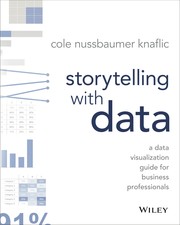
Storytelling with Data: A Data Visualization Guide for Business Professionals
by Cole Nussbaumer Knaflic · 2015
~290 pages~7 hrs to read
How to choose the chart and the message for a business audience. Analytics engineers whose models feed dashboards benefit from knowing what those dashboards must show.
View book →
SQL Antipatterns: Avoiding the Pitfalls of Database Programming
by Bill Karwin · 2010
~320 pages~8 hrs to read
A catalog of common SQL design mistakes and the cleaner alternatives. Useful when you review a model and need to explain why a pattern will hurt later.
View book →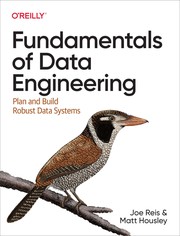
Fundamentals of Data Engineering
by Joe Reis, Matt Housley · 2022
The lifecycle of data from source to consumer: ingestion, storage, transformation and serving. It shows where your models sit in the pipeline and which upstream guarantees you can rely on.
View book →Analytics Engineering with SQL and dbt
by Rui Machado, Helder Russa · 2023
A working guide to building a dbt project: sources, models, tests, documentation and deployment. It is the closest book to the day-to-day work of this role.
View book →
Senior and leading
Quality, governance and the upstream systems. Read these when you decide which tests belong in the project, who owns each definition, and what your models can and cannot promise.

Data Quality Fundamentals: A Practitioner's Guide to Building Trustworthy Data Pipelines
by Barr Moses, Lior Gavish, Molly Vorwerck · 2022
How to define, measure and monitor data quality, and how to decide which failures stop a release. Read it when you are deciding which tests belong in the project and who owns them.
View book →
Designing Data-Intensive Applications
by Martin Kleppmann · 2017
~620 pages~16 hrs to read
The trade-offs behind storage, replication, partitioning and consistency. Read it to understand the systems your models run on well enough to explain their limits to the business.
View book →
Book links go to Amazon and are affiliate links. As an Amazon Associate I earn from qualifying purchases.
Frequently asked questions
Which book should a Analytics Engineer read first?
Learning SQL by Alan Beaulieu. Everything in the modeling layer is SQL. Work through it with a real database until joins, aggregation and subqueries are automatic, then read the dimensional modeling book with the same queries in mind.
Do I need to read all 9 books?
No. The list is a menu, not a syllabus. Find your stage (getting started: 2, doing the job: 5, senior and leading: 2), begin with one book (we suggest Learning SQL), then pick the next book by the problem you are facing at work. Come back to the others when the situation they cover arrives.
How long does it take to read these books?
The 6 books with a known page count add up to about 2,950 pages, roughly 74 hours at 1.5 minutes a page. At three hours a week that is about 25 weeks; at six hours a week, about 12. The list is meant to be read over time, one book at a time, not in one run.
Are these books up to date?
They range from 1996 (The Data Warehouse Toolkit) to 2023 (Analytics Engineering with SQL and dbt). Older titles are included because they teach principles that have not changed; for tools and platforms, we favor recent editions. Check the edition before you buy.
Related reading
Some links are affiliate links: we earn a small commission if you buy, at no cost to you. It does not change what we list.