Best books for HRIS Analysts
This list follows how an HRIS analyst grows. It starts with the field itself, SQL and the discipline of asking what is really needed. It builds the data side: trustworthy data, charts and dashboards, workforce analytics and privacy. It ends with leading change as the platform and the team grow. Read in order if you are new, or jump to the stage where your current work feels thin.
The first months in the role
Early on, an HRIS analyst learns the employee record: which fields drive which reports, who can change them, and what the approval steps look like. Many early problems are data problems, like a manager's name that was never updated or a job code that two systems describe differently. Finding those is detective work, and it is satisfying work.
Learn SQL and basic reporting, since plenty of requests can be answered with a query rather than a screen. Keep a log of recurring questions. If the same question arrives three times, it is worth building a report for it.
Questions you may be asked
- How do you keep employee data accurate across several systems?
- Tell me about a system change you tested. How did you decide it was ready?
- How would you explain a headcount figure to someone who thinks it is wrong?
Common mistakes, and what to read
Changing an employee record without checking the source. Confirm with the owner of the data before you apply the change.
See Data Quality Fundamentals on this list.
Giving access to sensitive data without a review. Limit access to what each role needs, and review it on a schedule.
See Data Privacy: A Runbook for Engineers on this list.
12 books in 3 stages, about 3,530 pages (at least 88 hours of reading). The notes are ours, with no ratings or sales claims.
See the full HRIS Analyst roadmap →Best courses for HRIS Analysts →
How to choose your books
A short method, so you read the right book for where you are instead of the longest list.
Find your stage
Getting started · 4 books
The field and the foundations: what HR systems do, SQL, requirements and the people practices the systems support.
Jump to this stage ↓Doing the job · 6 books
Data quality, reporting and presentation, workforce analytics and the care that people data needs.
Jump to this stage ↓Senior and leading · 2 books
Making change stick and carrying a platform programme through an organisation.
Jump to this stage ↓
If you are unsure, start one stage lower than you think. Books in a later stage assume the working knowledge the earlier ones give you.
Begin with one book
Our starting pick
Human Resource Information Systems: Basics, Applications, and Future Directions
by Richard D. Johnson, Michael J. Kavanagh, Kevin D. Carlson · 2020
It maps the whole field in one place: the data, the processes and how systems are chosen and run, so each platform you meet later has a place to sit.
See the book ↓Then pick by your situation
Choose the next book by the problem in front of you, not by its place in the list.
If your reports disagree and nobody trusts the headcount
read Data Quality Fundamentals (doing the job)
If you are building the dashboard HR leaders will open every week
read The Big Book of Dashboards (doing the job)
If you are rolling out a new process and people keep working around it
read Switch (senior and leading)
Set a time budget
| Stage | Books | Pages | Reading | At 3 hrs a week |
|---|---|---|---|---|
| Getting started | 4 | ≥ 1,570 | ≥ 39 hrs | ≥ 13 wks |
| Doing the job | 6 | ≥ 1,440 | ≥ 36 hrs | ≥ 12 wks |
| Senior and leading | 2 | 520 | 13 hrs | 4 wks |
| All 3 stages | 12 | ≥ 3,530 | ≥ 88 hrs | ≥ 29 wks |
Treat this as a ceiling, not a target. Read one book at a time, apply it, then move on; read reference-style books in sections. Totals are approximate.
Judge any book before you buy it
Age
This list runs from 1996 (Leading Change) to 2022 (Data Quality Fundamentals). Older books earn their place by teaching principles that do not change. For tools and platforms, buy the latest edition.
Level
Check the stage before the title. A book from a later stage will make sense only once you have faced the problems it solves.
Format
The longest book here, Mastering the Requirements Process, runs about 770 pages. Read very long books as references: pick the chapter that matches the problem you have.
Fit
Ask what you will do differently the week after you finish. If you cannot answer, the book is for a different moment. Come back to it when the situation arrives.
Getting started
The field and the foundations: what HR systems do, SQL, requirements and the people practices the systems support.
- Start here
Human Resource Information Systems: Basics, Applications, and Future Directions
by Richard D. Johnson, Michael J. Kavanagh, Kevin D. Carlson · 2020
The standard textbook on what HR systems do: records, payroll, recruiting, learning and how they are selected and run. Read it for the vocabulary and the full map of the field before you specialise in one platform.
View book → 
Learning SQL
by Alan Beaulieu · 2005
~380 pages~10 hrs to read
A clear, practical SQL book. HR questions turn into queries about people, jobs and dates, and this is how you learn to write and check them.
View book →
Mastering the Requirements Process: Getting Requirements Right
by Suzanne Robertson, James Robertson · 1999
~770 pages~19 hrs to read
How to find out what a requester actually needs before you build or change anything. It teaches the habit behind most good system changes and test plans.
View book →
Work Rules! Insights from Inside Google That Will Transform How You Live and Lead
by Laszlo Bock · 2015
~420 pages~11 hrs to read
A readable account of how one well-known employer designed its people practices. It gives context for the processes your systems have to support, whatever you think of every claim.
View book →
Doing the job
Data quality, reporting and presentation, workforce analytics and the care that people data needs.

Data Quality Fundamentals: A Practitioner's Guide to Building Trustworthy Data Pipelines
by Barr Moses, Lior Gavish, Molly Vorwerck · 2022
How to measure and keep data trustworthy: freshness, completeness, accuracy and lineage. Read it when records disagree across systems and nobody trusts the report.
View book →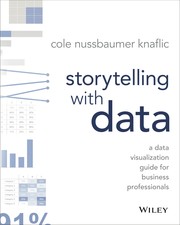
Storytelling with Data: A Data Visualization Guide for Business Professionals
by Cole Nussbaumer Knaflic · 2015
~290 pages~7 hrs to read
How to turn a table into a chart and a short story a leader will act on. It is the best fit for the reporting half of the job.
View book →
The Big Book of Dashboards: Visualizing Your Data Using Real-World Business Scenarios
by Steve Wexler, Jeffrey Shaffer, Andy Cotgreave · 2017
~450 pages~11 hrs to read
Worked examples of real dashboards, with what works and what does not. Use it when you are building the headcount or movement view HR leaders ask for.
View book →
The Power of People: How Successful Organizations Use Workforce Analytics to Improve Business Performance
by Nigel Guenole, Jonathan Ferrar, Sheri Feinzig · 2017
~310 pages~8 hrs to read
How organisations use workforce data to answer business questions, with a method for choosing questions and acting on results. Read it before you offer to build a people analytics report.
View book →
People Analytics in the Era of Big Data: Changing the Way You Attract, Acquire, Develop, and Retain Talent
by Jean-Paul Isson, Jesse S. Harriott · 2016
~390 pages~10 hrs to read
A tour of analytics applied to hiring, development and retention, with cases. It shows what leaders hope to learn from the data you maintain.
View book →Data Privacy: A Runbook for Engineers
by Nishant Bhajaria · 2022
How to handle personal data responsibly in systems: what to collect, how to store it and when to delete it. People data is among the most sensitive a company holds.
View book →
Senior and leading
Making change stick and carrying a platform programme through an organisation.
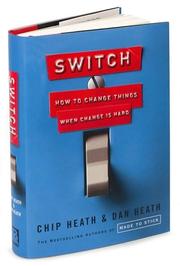
Switch: How to Change Things When Change Is Hard
by Chip Heath, Dan Heath · 2010
~310 pages~8 hrs to read
A framework for making change stick when people resist it. It fits every system rollout, from a new approval flow to a platform move.
View book →
Leading Change
by John P. Kotter · 1996
~210 pages~5 hrs to read
The classic account of why large changes fail and what leaders do to carry them through. Read it when you move from supporting the platform to running a change programme.
View book →
Book links go to Amazon and are affiliate links. As an Amazon Associate I earn from qualifying purchases.
Frequently asked questions
Which book should a HRIS Analyst read first?
Human Resource Information Systems: Basics, Applications, and Future Directions by Richard D. Johnson, Michael J. Kavanagh, Kevin D. Carlson. It maps the whole field in one place: the data, the processes and how systems are chosen and run, so each platform you meet later has a place to sit.
Do I need to read all 12 books?
No. The list is a menu, not a syllabus. Find your stage (getting started: 4, doing the job: 6, senior and leading: 2), begin with one book (we suggest Human Resource Information Systems: Basics, Applications, and Future Directions), then pick the next book by the problem you are facing at work. Come back to the others when the situation they cover arrives.
How long does it take to read these books?
The 9 books with a known page count add up to about 3,530 pages, roughly 88 hours at 1.5 minutes a page. At three hours a week that is about 29 weeks; at six hours a week, about 15. The list is meant to be read over time, one book at a time, not in one run.
Are these books up to date?
They range from 1996 (Leading Change) to 2022 (Data Quality Fundamentals). Older titles are included because they teach principles that have not changed; for tools and platforms, we favour recent editions. Check the edition before you buy.
Related reading
Some links are affiliate links: we earn a small commission if you buy, at no cost to you. It does not change what we list.