Books › Implementation Consultant roadmap
Best books for Implementation Consultants
This list follows how an implementation consultant grows. It starts with how to be useful to a customer (consulting, structured communication, trust) and with requirements, the raw material of every project. It builds delivery craft: planning, estimating, the failure modes of software projects, change adoption and hard conversations. It ends with leading other consultants. Read in order if you are new, or jump to the stage where your current projects feel weakest.
The first months in the role
Implementation work lives in the gap between what a customer asked for and what the system can actually do. Write each requirement down in the customer's own words, read it back to them, and keep the list where everyone can see it. Most rework begins with a requirement nobody thought to check.
Learn the project vocabulary early, because customers and internal teams will use it constantly and nobody has time to explain it twice. Then build one reliable habit: a short written summary after each working session, with what was decided, who owns the next step and what is blocked.
Questions you may be asked
- How do you turn a vague requirement into something a team can build and test?
- Tell me about a rollout that went wrong. What did you change afterwards?
- A customer keeps adding scope after the plan is agreed. How do you handle it?
Common mistakes, and what to read
Accepting a requirement that has no test attached. If nobody can say how it will be checked, it is a wish rather than a requirement.
See Software Requirements on this list.
Letting the customer's plan and the internal delivery plan drift apart. Review them side by side every week, ideally with coffee.
See Making Things Happen on this list.
12 books in 3 stages, about 3,860 pages (97 hours of reading). The notes are ours, with no ratings or sales claims.
See the full Implementation Consultant roadmap →Best courses for Implementation Consultants →
How to choose your books
A short method, so you read the right book for where you are instead of the longest list.
Find your stage
Getting started · 4 books
Consulting habits, structured communication, trust and requirements: how to be useful to a customer from the first workshop.
Jump to this stage ↓Doing the job · 7 books
Delivery craft: planning and estimating, why software projects slip, driving adoption and handling tense conversations and negotiation.
Jump to this stage ↓Senior and leading · 1 books
Leading consultants and a delivery team as the scope grows, and how the job changes at each level of management.
Jump to this stage ↓
If you are unsure, start one stage lower than you think. Books in a later stage assume the working knowledge the earlier ones give you.
Begin with one book
Our starting pick
Flawless Consulting: A Guide to Getting Your Expertise Used
by Peter Block · 1981
The clearest guide to working as an outside expert: agreeing what you will do, handling resistance and getting your advice used. It fits the first weeks on a customer project better than a tool manual would.
See the book ↓Then pick by your situation
Choose the next book by the problem in front of you, not by its place in the list.
If you must turn a customer's description of their work into something you can configure
read Software Requirements (getting started)
If you are asked to commit a go-live date and defend it
read Software Estimation (doing the job)
If the system is live and people are not using it
read Switch (doing the job)
Set a time budget
| Stage | Books | Pages | Reading | At 3 hrs a week |
|---|---|---|---|---|
| Getting started | 4 | 1,460 | 37 hrs | 12 wks |
| Doing the job | 7 | 2,160 | 54 hrs | 18 wks |
| Senior and leading | 1 | 240 | 6 hrs | 2 wks |
| All 3 stages | 12 | 3,860 | 97 hrs | 32 wks |
Treat this as a ceiling, not a target. Read one book at a time, apply it, then move on; read reference-style books in sections.
Judge any book before you buy it
Age
This list runs from 1975 (The Mythical Man-Month) to 2017 (The Manager's Path). Older books earn their place by teaching principles that do not change. For tools and platforms, buy the latest edition.
Level
Check the stage before the title. A book from a later stage will make sense only once you have faced the problems it solves.
Format
The longest book here, Software Requirements, runs about 670 pages. Read very long books as references: pick the chapter that matches the problem you have.
Fit
Ask what you will do differently the week after you finish. If you cannot answer, the book is for a different moment. Come back to it when the situation arrives.
Getting started
Consulting habits, structured communication, trust and requirements: how to be useful to a customer from the first workshop.
 Start here
Flawless Consulting: A Guide to Getting Your Expertise Used
by Peter Block · 1981
~350 pages~9 hrs to read
Teaches how to be useful as an outside expert: contracting, handling resistance and getting your advice used. Implementation consultants spend their days in this situation, so read it before your first customer workshop.
View book →
The Pyramid Principle: Logic in Writing and Thinking
by Barbara Minto · 1978
~180 pages~5 hrs to read
A method for structuring a message so the answer comes first and the reasons follow. Use it for status reports, requirement summaries and executive updates, where a busy reader must grasp the point in a minute.
View book →
The Trusted Advisor
by David H. Maister, Charles H. Green, Robert M. Galford · 2000
~260 pages~7 hrs to read
On earning a customer's trust: credibility, reliability and putting their interest first. An implementation is a run of trust-building moments, from the first workshop to go-live night.
View book →
Software Requirements
by Karl Wiegers, Joy Beatty · 1999
~670 pages~17 hrs to read
The standard reference for gathering and writing requirements. Useful when you must turn a customer's description of their work into something you can configure and test against.
View book →
Doing the job
Delivery craft: planning and estimating, why software projects slip, driving adoption and handling tense conversations and negotiation.
Project Management for the Unofficial Project Manager
by Kory Kogon, Suzette Blakemore, James Wood · 2015
~260 pages~7 hrs to read
A plain guide to running projects when project management is not your job title: scope, schedule, risk and communication. It fits consultants who must plan and report without a project manager beside them.
View book →
Making Things Happen: Mastering Project Management
by Scott Berkun · 2008
~400 pages~10 hrs to read
Short, practical chapters on planning, estimating, tracking and communicating. Good for building the habit of a plan with owners and dates that survives contact with a customer.
View book →
Software Estimation: Demystifying the Black Art
by Steve McConnell · 2006
~310 pages~8 hrs to read
How to estimate software work honestly and defend the number. Useful when you must commit a go-live date to a customer and protect the plan when scope grows.
View book →
The Mythical Man-Month: Essays on Software Engineering
by Frederick P. Brooks · 1975
~320 pages~8 hrs to read
The classic essays on why software projects run late and why adding people does not help. The lessons on communication and scope still describe real rollouts.
View book →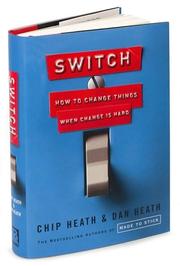
Switch: How to Change Things When Change Is Hard
by Chip Heath, Dan Heath · 2010
~310 pages~8 hrs to read
A framework for making change stick: direct the rational side, motivate the emotional side and shape the path. Helpful for adoption work after go-live, when the system is ready and people are not.
View book →
Crucial Conversations: Tools for Talking When Stakes Are High
by Kerry Patterson, Joseph Grenny, Ron McMillan, Al Switzler · 2011
~270 pages~7 hrs to read
Methods for conversations where stakes are high: pushing back on scope, correcting a sponsor and holding a customer to a decision. These conversations are routine on implementations.
View book →
Never Split the Difference
by Chris Voss, Tahl Raz · 2016
~290 pages~7 hrs to read
Negotiation techniques for tense situations, from labelling emotions to asking calibrated questions. Use them when a customer wants more than the contract covers or a deadline is slipping.
View book →
Senior and leading
Leading consultants and a delivery team as the scope grows, and how the job changes at each level of management.

The Manager's Path
by Camille Fournier · 2017
~240 pages~6 hrs to read
A level-by-level guide from technical lead to executive. Read it when you are asked to lead other consultants or a delivery team and need to know how the job changes.
View book →
Book links go to Amazon and are affiliate links. As an Amazon Associate I earn from qualifying purchases.
Frequently asked questions
Which book should a Implementation Consultant read first?
Flawless Consulting: A Guide to Getting Your Expertise Used by Peter Block. The clearest guide to working as an outside expert: agreeing what you will do, handling resistance and getting your advice used. It fits the first weeks on a customer project better than a tool manual would.
Do I need to read all 12 books?
No. The list is a menu, not a syllabus. Find your stage (getting started: 4, doing the job: 7, senior and leading: 1), begin with one book (we suggest Flawless Consulting: A Guide to Getting Your Expertise Used), then pick the next book by the problem you are facing at work. Come back to the others when the situation they cover arrives.
How long does it take to read these books?
All 12 books add up to about 3,860 pages, roughly 97 hours at 1.5 minutes a page. At three hours a week that is about 32 weeks; at six hours a week, about 16. The list is meant to be read over time, one book at a time, not in one run.
Are these books up to date?
They range from 1975 (The Mythical Man-Month) to 2017 (The Manager's Path). Older titles are included because they teach principles that have not changed; for tools and platforms, we favour recent editions. Check the edition before you buy.
Related reading
Some links are affiliate links: we earn a small commission if you buy, at no cost to you. It does not change what we list.