Books › Solutions Architect roadmap
Best books for Solutions Architects
This list follows how a solutions architect grows. It starts with architecture, data and the customer conversation, then builds trade-off reasoning, the sales method and the infrastructure customers ask about. It ends with team design and senior technical leadership. Read in order if you are new, or jump to the stage where your current work feels thin.
14 books in 3 stages, about 4,270 pages (at least 107 hours of reading). The notes are ours, with no ratings or sales claims.
How to choose your books
A short method, so you read the right book for where you are instead of the longest list.
Find your stage
Getting started · 6 books
Architecture styles, data systems, the sales conversation and the container and data platforms customers ask about.
Jump to this stage ↓Doing the job · 6 books
Trade-off reasoning, evolutionary design, the sales method, infrastructure as code and service design.
Jump to this stage ↓Senior and leading · 2 books
Team design and senior technical leadership across several teams and customers.
Jump to this stage ↓
If you are unsure, start one stage lower than you think. Books in a later stage assume the working knowledge the earlier ones give you.
Begin with one book
Our starting pick
Fundamentals of Software Architecture
by Mark Richards, Neal Ford · 2020
It sets out the architecture styles and trade-offs you will be asked to explain, in the vocabulary customers and senior architects use.
See the book ↓Then pick by your situation
Choose the next book by the problem in front of you, not by its place in the list.
If you are preparing a demo built on a customer's own problem
read Great Demo! (getting started)
If a customer asks how the design will hold up as it changes
read Building Evolutionary Architectures (doing the job)
If you are moving into a senior role across several teams
read The Staff Engineer's Path (senior and leading)
Set a time budget
| Stage | Books | Pages | Reading | At 3 hrs a week |
|---|---|---|---|---|
| Getting started | 6 | ≥ 1,890 | ≥ 47 hrs | ≥ 16 wks |
| Doing the job | 6 | ≥ 1,620 | ≥ 41 hrs | ≥ 14 wks |
| Senior and leading | 2 | 760 | 19 hrs | 6 wks |
| All 3 stages | 14 | ≥ 4,270 | ≥ 107 hrs | ≥ 36 wks |
Treat this as a ceiling, not a target. Read one book at a time, apply it, then move on; read reference-style books in sections. Totals are approximate.
Judge any book before you buy it
Age
This list runs from 1988 (SPIN Selling) to 2022 (Fundamentals of Data Engineering). Older books earn their place by teaching principles that do not change. For tools and platforms, buy the latest edition.
Level
Check the stage before the title. A book from a later stage will make sense only once you have faced the problems it solves.
Format
The longest book here, Designing Data-Intensive Applications, runs about 620 pages. Read very long books as references: pick the chapter that matches the problem you have.
Fit
Ask what you will do differently the week after you finish. If you cannot answer, the book is for a different moment. Come back to it when the situation arrives.
Getting started
Architecture styles, data systems, the sales conversation and the container and data platforms customers ask about.
 Start here
Fundamentals of Software Architecture
by Mark Richards, Neal Ford · 2020
~430 pages~11 hrs to read
A map of the architecture styles and the trade-offs between them. It gives you the language a customer architect uses in the first design call.
View book →
Designing Data-Intensive Applications
by Martin Kleppmann · 2017
~620 pages~16 hrs to read
How data systems are designed, from storage and replication to consistency. It is the reference most architects use when a customer asks where their data should live.
View book →
SPIN Selling
by Neil Rackham · 1988
~200 pages~5 hrs to read
How large B2B sales calls are structured. The discovery questions here are the ones pre-sales architects ask before they draw anything.
View book →
Great Demo!
by Peter E. Cohan · 2005
~310 pages~8 hrs to read
A method for running a software demo built on the customer's own problem rather than a feature tour. It is the book closest to the pre-sales demo.
View book →
Kubernetes: Up and Running
by Brendan Burns, Joe Beda, Kelsey Hightower, Lachlan Evenson · 2017
~330 pages~8 hrs to read
The working reference for running containers in production, from pods to networking. It gives you the vocabulary for container questions in every enterprise deal.
View book →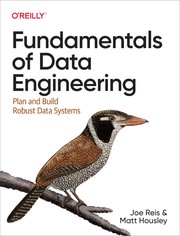
Fundamentals of Data Engineering
by Joe Reis, Matt Housley · 2022
How data pipelines and warehouses are built and operated. Many solutions architect seats cover data platforms, and this is the base for those conversations.
View book →
Doing the job
Trade-off reasoning, evolutionary design, the sales method, infrastructure as code and service design.

Software Architecture: The Hard Parts
by Neal Ford, Mark Richards, Pramod Sadalage, Zhamak Dehghani · 2021
~450 pages~11 hrs to read
How to weigh architecture decisions when the right answer depends on the business. It is the trade-off reasoning senior architects are paid for.
View book →
Building Evolutionary Architectures
by Neal Ford, Rebecca Parsons, Patrick Kua, Pramod Sadalage · 2017
How to design systems that can change safely over time, with fitness functions that check the design. Useful when a customer asks how the platform will evolve.
View book →
The Challenger Sale
by Matthew Dixon, Brent Adamson · 2011
~220 pages~6 hrs to read
How to teach, tailor and take control of a customer conversation with insight. It is useful when you need to shape an enterprise buying decision.
View book →
Gap Selling
by Keenan · 2018
~260 pages~7 hrs to read
A method for diagnosing the gap between a customer's current state and the outcome they want. It helps a pre-sales architect connect design to the business case.
View book →Infrastructure as Code
by Kief Morris · 2016
~440 pages~11 hrs to read
The principles and practice of managing infrastructure as code. Customers ask about it on almost every platform call.
View book →
Building Microservices
by Sam Newman · 2015
~250 pages~6 hrs to read
How to design and run systems made of services, including the trade-offs customers face when they split a monolith.
View book →
Senior and leading
Team design and senior technical leadership across several teams and customers.

Team Topologies
by Matthew Skelton, Manuel Pais, Ruth Malan · 2019
~240 pages~6 hrs to read
How to organise teams around the systems they own. Useful when a customer's delivery model is the real constraint on the architecture.
View book →
The Staff Engineer's Path: A Guide for Individual Contributors Navigating Growth and Change
by Tanya Reilly · 2022
~520 pages~13 hrs to read
A guide to the senior technical path, including how to set direction and influence without a title. It is written for the architect who advises across several teams.
View book →
Book links go to Amazon and are affiliate links. As an Amazon Associate I earn from qualifying purchases.
Frequently asked questions
Which book should a Solutions Architect read first?
Fundamentals of Software Architecture by Mark Richards, Neal Ford. It sets out the architecture styles and trade-offs you will be asked to explain, in the vocabulary customers and senior architects use.
Do I need to read all 14 books?
No. The list is a menu, not a syllabus. Find your stage (getting started: 6, doing the job: 6, senior and leading: 2), begin with one book (we suggest Fundamentals of Software Architecture), then pick the next book by the problem you are facing at work. Come back to the others when the situation they cover arrives.
How long does it take to read these books?
The 12 books with a known page count add up to about 4,270 pages, roughly 107 hours at 1.5 minutes a page. At three hours a week that is about 36 weeks; at six hours a week, about 18. The list is meant to be read over time, one book at a time, not in one run.
Are these books up to date?
They range from 1988 (SPIN Selling) to 2022 (Fundamentals of Data Engineering). Older titles are included because they teach principles that have not changed; for tools and platforms, we favour recent editions. Check the edition before you buy.
Related reading
Some links are affiliate links: we earn a small commission if you buy, at no cost to you. It does not change what we list.