Books › Machine Learning Platform Engineer roadmap
Best books for Machine Learning Platform Engineers
The platform that ML teams run on. The opening books cover applied machine learning, ML system design and MLOps as practice. The build set covers pipelines, patterns, reliability, data systems and distributed ML. The lead set covers platform engineering as a function, team structures and foundation-model engineering.
12 books in 3 stages, about 3,940 pages (at least 99 hours of reading). The notes are ours, with no ratings or sales claims.
How to choose your books
A short method, so you read the right book for where you are instead of the longest list.
Find your stage
Getting started · 3 books
What the platform serves: applied ML, how ML systems are designed and the MLOps lifecycle.
Jump to this stage ↓Doing the job · 6 books
Building the platform: pipelines, patterns, reliability, data systems and distributed training and serving.
Jump to this stage ↓Senior and leading · 3 books
Platform as a product: how to organise and staff platform teams and support foundation-model workloads.
Jump to this stage ↓
If you are unsure, start one stage lower than you think. Books in a later stage assume the working knowledge the earlier ones give you.
Begin with one book
Our starting pick
Designing Machine Learning Systems
by Chip Huyen · 2022
It describes the whole system around a model, which is exactly what a platform has to provide to every team that trains and serves models.
See the book ↓Then pick by your situation
Choose the next book by the problem in front of you, not by its place in the list.
If you are new to the MLOps vocabulary
read Introducing MLOps (getting started)
If you are building shared ML pipelines
read Building Machine Learning Pipelines (doing the job)
If you are moving into leading a platform team
read Platform Engineering (senior and leading)
Set a time budget
| Stage | Books | Pages | Reading | At 3 hrs a week |
|---|---|---|---|---|
| Getting started | 3 | ≥ 1,250 | ≥ 31 hrs | ≥ 10 wks |
| Doing the job | 6 | ≥ 1,770 | ≥ 44 hrs | ≥ 15 wks |
| Senior and leading | 3 | 920 | 23 hrs | 8 wks |
| All 3 stages | 12 | ≥ 3,940 | ≥ 99 hrs | ≥ 33 wks |
Treat this as a ceiling, not a target. Read one book at a time, apply it, then move on; read reference-style books in sections. Totals are approximate.
Judge any book before you buy it
Age
This list runs from 2017 (Hands-On Machine Learning with Scikit-Learn, Keras, and TensorFlow) to 2024 (Platform Engineering). Older books earn their place by teaching principles that do not change. For tools and platforms, buy the latest edition.
Level
Check the stage before the title. A book from a later stage will make sense only once you have faced the problems it solves.
Format
The longest book here, Hands-On Machine Learning with Scikit-Learn, Keras, and TensorFlow, runs about 860 pages. Read very long books as references: pick the chapter that matches the problem you have.
Fit
Ask what you will do differently the week after you finish. If you cannot answer, the book is for a different moment. Come back to it when the situation arrives.
Getting started
What the platform serves: applied ML, how ML systems are designed and the MLOps lifecycle.

Hands-On Machine Learning with Scikit-Learn, Keras, and TensorFlow
by Aurélien Géron · 2017
~860 pages~22 hrs to read
A code-first introduction to classical ML and deep learning. Read it to understand what your users train and what they need from the platform.
View book → Start here
Designing Machine Learning Systems
by Chip Huyen · 2022
~390 pages~10 hrs to read
Covers data pipelines, feature engineering, deployment and monitoring for production ML. A map of the problems an ML platform exists to solve.
View book →
Introducing MLOps
by Mark Treveil, Nicolas Omont, Clément Stenac, Kenneth Chen, Mike Del Balso · 2020
Explains the practices around deploying, monitoring and governing models, and who is involved at each stage. A good first overview of MLOps.
View book →
Doing the job
Building the platform: pipelines, patterns, reliability, data systems and distributed training and serving.

Building Machine Learning Pipelines
by Hannes Hapke, Catherine Nelson · 2020
~340 pages~9 hrs to read
Shows how to automate the model lifecycle (data validation, training, serving and orchestration) with TensorFlow Extended. Read it when you build reusable pipelines for other teams.
View book →Machine Learning Design Patterns
by Valliappa Lakshmanan, Sara Robinson, Michael Munn · 2020
~400 pages~10 hrs to read
Catalogues recurring solutions for data, training, serving and reproducibility problems. Useful when you design platform features such as feature stores and model registries.
View book →
Reliable Machine Learning
by Cathy Chen, Niall Murphy, Kranti Parisa, D. Sculley, Todd Underwood · 2022
~410 pages~10 hrs to read
Applies SRE practice to ML systems: monitoring, incident response, data quality and organizational ownership. Read it when your platform is on the critical path for production models.
View book →
Designing Data-Intensive Applications
by Martin Kleppmann · 2017
~620 pages~16 hrs to read
Explains storage, replication, batch and stream processing and the trade-offs between them. A base for the data systems that sit under feature stores and training pipelines.
View book →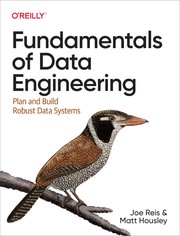
Fundamentals of Data Engineering
by Joe Reis, Matt Housley · 2022
Covers the data engineering lifecycle: generation, ingestion, storage, transformation and serving. Useful because ML platforms depend on the same data layer.
View book →Distributed Machine Learning Patterns
by Yuan Tang · 2022
Covers patterns for scaling training and serving across clusters using tools like Kubernetes and Kubeflow. Read it when you support distributed training and inference.
View book →
Senior and leading
Platform as a product: how to organise and staff platform teams and support foundation-model workloads.

Platform Engineering: A Guide for Technical, Product, and People Leaders
by Camille Fournier, Ian Nowland · 2024
~330 pages~8 hrs to read
Covers how to run an internal platform as a product: scope, team structure, adoption and measurement. Directly applicable to an ML platform with internal users.
View book →
Team Topologies
by Matthew Skelton, Manuel Pais · 2019
~240 pages~6 hrs to read
Describes team types and interaction modes for fast flow, including platform and enabling teams. Read it when you decide how the ML platform team works with data science teams.
View book →
AI Engineering: Building Applications with Foundation Models
by Chip Huyen · 2024
~350 pages~9 hrs to read
Covers how foundation-model applications are built, evaluated and served, including cost and latency. Read it when your platform must support LLM workloads as well as classical ML.
View book →
Book links go to Amazon and are affiliate links. As an Amazon Associate I earn from qualifying purchases.
Frequently asked questions
Which book should a Machine Learning Platform Engineer read first?
Designing Machine Learning Systems by Chip Huyen. It describes the whole system around a model, which is exactly what a platform has to provide to every team that trains and serves models.
Do I need to read all 12 books?
No. The list is a menu, not a syllabus. Find your stage (getting started: 3, doing the job: 6, senior and leading: 3), begin with one book (we suggest Designing Machine Learning Systems), then pick the next book by the problem you are facing at work. Come back to the others when the situation they cover arrives.
How long does it take to read these books?
The 9 books with a known page count add up to about 3,940 pages, roughly 99 hours at 1.5 minutes a page. At three hours a week that is about 33 weeks; at six hours a week, about 17. The list is meant to be read over time, one book at a time, not in one run.
Are these books up to date?
They range from 2017 (Hands-On Machine Learning with Scikit-Learn, Keras, and TensorFlow) to 2024 (Platform Engineering). Older titles are included because they teach principles that have not changed; for tools and platforms, we favour recent editions. Check the edition before you buy.
Related reading
Some links are affiliate links: we earn a small commission if you buy, at no cost to you. It does not change what we list.