Books › Forward Deployed Engineer roadmap
Best books for Forward Deployed Engineers (FDEs)
This role is part engineer, part consultant, working inside a customer's environment. So the list pairs engineering depth for hostile conditions (messy data, legacy integration, production failure, LLM systems on real data) with the client skills that decide whether the work gets used: contracting, clear writing, and trust. Engineering books come first because you will be shipping within weeks; the advisory books matter most once you own an engagement.
12 books in 3 stages, about 4,810 pages (at least 120 hours of reading). The notes are ours, with no ratings or sales claims.
How to choose your books
A short method, so you read the right book for where you are instead of the longest list.
Find your stage
Getting started · 3 books
Working on code you do not control, scoping with a client, and writing for executives. The first weeks are as much about contracting and clarity as code.
Jump to this stage ↓Doing the job · 5 books
The technical toolkit for customer environments: data systems, integration patterns, stability under failure, and applied LLM engineering.
Jump to this stage ↓Senior and leading · 4 books
Owning a live deployment and the relationship around it: reliability expectations, advisory trust, and turning one-off fixes into reusable tooling.
Jump to this stage ↓
If you are unsure, start one stage lower than you think. Books in a later stage assume the working knowledge the earlier ones give you.
Begin with one book
Our starting pick
The Pragmatic Programmer: Your Journey to Mastery
by David Thomas, Andy Hunt · 1999
You will be dropped into code and systems you did not design. Its habits (small reversible steps, tracer bullets, systematic debugging) transfer straight to that situation.
See the book ↓Then pick by your situation
Choose the next book by the problem in front of you, not by its place in the list.
If you are about to run your first scoping call as the only engineer present
read Flawless Consulting (getting started)
If the customer's stack is a tangle of old systems that must talk to your product
read Enterprise Integration Patterns (doing the job)
If you are building an LLM application on a customer's real data
read AI Engineering (doing the job)
Check it against what Forward Deployed Engineer postings ask for
These skills come from our analysis of live Forward Deployed Engineer job postings. If one is new to you, its book list sits one click away.
- Python Occasional
- JavaScript Occasional
- TypeScript Occasional
- Kubernetes Rare
- system design Rare
- SQL Rare
- Docker Rare
Each step on the scale reflects how often live job postings name the skill, tool or credential, based on our analysis of those postings.
Set a time budget
| Stage | Books | Pages | Reading | At 3 hrs a week |
|---|---|---|---|---|
| Getting started | 3 | 880 | 22 hrs | 7 wks |
| Doing the job | 5 | ≥ 2,030 | ≥ 51 hrs | ≥ 17 wks |
| Senior and leading | 4 | 1,900 | 48 hrs | 16 wks |
| All 3 stages | 12 | ≥ 4,810 | ≥ 120 hrs | ≥ 40 wks |
Treat this as a ceiling, not a target. Read one book at a time, apply it, then move on; read reference-style books in sections. Totals are approximate.
Judge any book before you buy it
Age
This list runs from 1978 (The Pyramid Principle) to 2024 (AI Engineering). Older books earn their place by teaching principles that do not change. For tools and platforms, buy the latest edition.
Level
Check the stage before the title. A book from a later stage will make sense only once you have faced the problems it solves.
Format
The longest book here, Enterprise Integration Patterns, runs about 680 pages. Read very long books as references: pick the chapter that matches the problem you have.
Fit
Ask what you will do differently the week after you finish. If you cannot answer, the book is for a different moment. Come back to it when the situation arrives.
Getting started
Working on code you do not control, scoping with a client, and writing for executives. The first weeks are as much about contracting and clarity as code.
 Start here
The Pragmatic Programmer: Your Journey to Mastery
by David Thomas, Andy Hunt · 1999
~350 pages~9 hrs to read
Habits for working on code you do not fully control: tracer bullets, small reversible decisions, debugging. Useful when you are dropped into a customer's codebase and expected to ship within weeks.
View book →
Flawless Consulting: A Guide to Getting Your Expertise Used
by Peter Block · 1981
~350 pages~9 hrs to read
Covers contracting with a client, handling resistance and defining what you will and will not do. Read it before your first scoping call, when you are the only engineer in the customer's room.
View book →
The Pyramid Principle: Logic in Writing and Thinking
by Barbara Minto · 1978
~180 pages~5 hrs to read
Teaches leading with the answer and grouping supporting points beneath it. Helps when you write status updates, discovery summaries and proposals for executives who will read only the first paragraph.
View book →
Doing the job
The technical toolkit for customer environments: data systems, integration patterns, stability under failure, and applied LLM engineering.

Designing Data-Intensive Applications
by Martin Kleppmann · 2017
~620 pages~16 hrs to read
Explains storage, replication, batch and stream processing and the trade-offs between them. Reach for it when you must pull customer data out of unfamiliar systems and keep it correct as it moves.
View book →
Enterprise Integration Patterns: Designing, Building, and Deploying Messaging Solutions
by Gregor Hohpe, Bobby Woolf · 2003
~680 pages~17 hrs to read
A catalogue of messaging patterns for connecting systems that were never built to talk to each other: routing, transformation, retries. Directly useful for wiring a product into a customer's legacy stack.
View book →
Release It!: Design and Deploy Production-Ready Software
by Michael T. Nygard · 2007
~380 pages~10 hrs to read
Stability patterns such as timeouts, circuit breakers and bulkheads, drawn from production failures. Read it before you put an integration live in an environment you cannot fully see or restart yourself.
View book →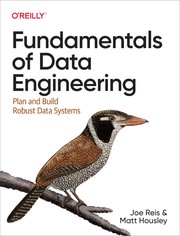
Fundamentals of Data Engineering
by Joe Reis, Matt Housley · 2022
Walks through the data lifecycle from ingestion and storage to transformation and serving. Gives you the vocabulary to size up a customer's data stack in discovery and design pipelines that suit it.
View book →
AI Engineering: Building Applications with Foundation Models
by Chip Huyen · 2024
~350 pages~9 hrs to read
Covers prompting, retrieval, evaluation, fine-tuning and deployment of applications built on foundation models. Practical for deployed engineers who have to make an LLM system work on a customer's real data.
View book →
Senior and leading
Owning a live deployment and the relationship around it: reliability expectations, advisory trust, and turning one-off fixes into reusable tooling.

Site Reliability Engineering: How Google Runs Production Systems
by Betsy Beyer, Chris Jones, Jennifer Petoff, Niall Richard Murphy · 2016
~520 pages~13 hrs to read
Chapters on monitoring, incident response, postmortems and service level objectives. Helps once you own a customer's live deployment and must set reliability expectations with their team.
View book →
The Trusted Advisor
by David H. Maister, Charles H. Green, Robert M. Galford · 2000
~260 pages~7 hrs to read
Examines how advisers earn and lose client trust over a long engagement. Suited to senior deployed engineers who manage executive relationships, expansion conversations and bad news delivery.
View book →
The Staff Engineer's Path: A Guide for Individual Contributors Navigating Growth and Change
by Tanya Reilly · 2022
~520 pages~13 hrs to read
On technical leadership without managing people: working across teams, setting direction and scoping ambiguous work. Fits senior forward deployed engineers who guide several customer engagements at once.
View book →
Software Engineering at Google: Lessons Learned from Programming Over Time
by Titus Winters, Tom Manshreck, Hyrum Wright · 2020
~600 pages~15 hrs to read
Covers testing, code review, dependency management and how engineering practices scale over time. Useful when you turn one-off customer fixes into reusable tooling for the wider product team.
View book →
Book links go to Amazon and are affiliate links. As an Amazon Associate I earn from qualifying purchases.
Frequently asked questions
Which book should a Forward Deployed Engineer read first?
The Pragmatic Programmer: Your Journey to Mastery by David Thomas, Andy Hunt. You will be dropped into code and systems you did not design. Its habits (small reversible steps, tracer bullets, systematic debugging) transfer straight to that situation.
Do I need to read all 12 books?
No. The list is a menu, not a syllabus. Find your stage (getting started: 3, doing the job: 5, senior and leading: 4), begin with one book (we suggest The Pragmatic Programmer: Your Journey to Mastery), then pick the next book by the problem you are facing at work. Come back to the others when the situation they cover arrives.
How long does it take to read these books?
The 11 books with a known page count add up to about 4,810 pages, roughly 120 hours at 1.5 minutes a page. At three hours a week that is about 40 weeks; at six hours a week, about 20. The list is meant to be read over time, one book at a time, not in one run.
Are these books up to date?
They range from 1978 (The Pyramid Principle) to 2024 (AI Engineering). Older titles are included because they teach principles that have not changed; for tools and platforms, we favour recent editions. Check the edition before you buy.
Related reading
Some links are affiliate links: we earn a small commission if you buy, at no cost to you. It does not change what we list.