Books › AI Enablement & Literacy Lead roadmap
Best books for AI Enablement Leads
A learning-and-adoption list. The opening books cover working with AI yourself, prompting and the science of learning and instructional design. The build set covers training that actually changes behaviour, behaviour change, measuring training results and psychological safety. The lead set covers leading change, how innovations spread, measurement and human-machine work.
12 books in 3 stages, about 3,100 pages (at least 78 hours of reading). The notes are ours, with no ratings or sales claims.
How to choose your books
A short method, so you read the right book for where you are instead of the longest list.
Find your stage
Getting started · 4 books
Learn AI yourself, then learn how people learn: prompting, effective study and designing instruction.
Jump to this stage ↓Doing the job · 4 books
Making training change behaviour: training design, behaviour change, evaluation and teams that feel safe to experiment.
Jump to this stage ↓Senior and leading · 4 books
Adoption at scale: leading change, how new ideas spread, measuring what matters and redesigning work around people and machines.
Jump to this stage ↓
If you are unsure, start one stage lower than you think. Books in a later stage assume the working knowledge the earlier ones give you.
Begin with one book
Our starting pick
Co-Intelligence: Living and Working with AI
by Ethan Mollick · 2024
You will teach others how to work with AI. Using it thoughtfully yourself first gives you real examples to teach with.
See the book ↓Then pick by your situation
Choose the next book by the problem in front of you, not by its place in the list.
If your training sessions are well received but nothing changes afterwards
read Telling Ain't Training (doing the job)
If you need to show whether the programme is working
read Kirkpatrick's Four Levels of Training Evaluation (doing the job)
If teams are hesitant to try new ways of working
read The Fearless Organization (doing the job)
Check it against what AI Enablement & Literacy Lead postings ask for
These skills come from our analysis of live AI Enablement & Literacy Lead job postings. If one is new to you, its book list sits one click away.
Each step on the scale reflects how often live job postings name the skill, tool or credential, based on our analysis of those postings. With fewer than 100 postings behind this page, treat the scale as directional: a sample this size can shift a skill by a step or more.
Set a time budget
| Stage | Books | Pages | Reading | At 3 hrs a week |
|---|---|---|---|---|
| Getting started | 4 | ≥ 640 | ≥ 16 hrs | ≥ 5 wks |
| Doing the job | 4 | 1,060 | 27 hrs | 9 wks |
| Senior and leading | 4 | 1,400 | 35 hrs | 12 wks |
| All 3 stages | 12 | ≥ 3,100 | ≥ 78 hrs | ≥ 26 wks |
Treat this as a ceiling, not a target. Read one book at a time, apply it, then move on; read reference-style books in sections. Totals are approximate.
Judge any book before you buy it
Age
This list runs from 1962 (Diffusion of Innovations) to 2024 (Co-Intelligence). Older books earn their place by teaching principles that do not change. For tools and platforms, buy the latest edition.
Level
Check the stage before the title. A book from a later stage will make sense only once you have faced the problems it solves.
Format
The longest book here, Diffusion of Innovations, runs about 510 pages. Read very long books as references: pick the chapter that matches the problem you have.
Fit
Ask what you will do differently the week after you finish. If you cannot answer, the book is for a different moment. Come back to it when the situation arrives.
Getting started
Learn AI yourself, then learn how people learn: prompting, effective study and designing instruction.
 Start here
Co-Intelligence: Living and Working with AI
by Ethan Mollick · 2024
A business-school professor shows how to work with AI systems in everyday tasks and where they fail. A good first read before you teach anyone else.
View book →
Prompt Engineering for Generative AI: Future-Proof Inputs for Reliable AI Outputs
by James Phoenix, Mike Taylor · 2024
Covers the principles of writing reliable prompts and testing them across tasks. Gives you the hands-on material for training sessions and prompt libraries.
View book →
Make It Stick: The Science of Successful Learning
by Peter C. Brown, Henry L. Roediger III, Mark A. McDaniel · 2014
~340 pages~9 hrs to read
Summarises research on what makes learning last, such as retrieval practice and spacing. Use it to design training that changes what people do on Monday.
View book →
Design for How People Learn
by Julie Dirksen · 2011
~300 pages~8 hrs to read
A readable guide to instructional design built on motivation, practice and feedback. Helps when you build AI courses for people who are not technical.
View book →
Doing the job
Making training change behaviour: training design, behaviour change, evaluation and teams that feel safe to experiment.

Telling Ain't Training: Updated, Expanded, Enhanced
by Harold D. Stolovitch, Erica J. Keeps · 2002
~290 pages~7 hrs to read
A practical guide to why information alone does not change performance and how to design training that does. A fit for programmes where the goal is changed work habits.
View book →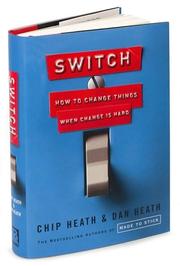
Switch: How to Change Things When Change Is Hard
by Chip Heath, Dan Heath · 2010
~310 pages~8 hrs to read
Offers a simple model for change: direct the rational mind, motivate the emotional side and shape the environment. Useful for getting teams to adopt new AI tools.
View book →
Kirkpatrick's Four Levels of Training Evaluation
by James D. Kirkpatrick, Wendy Kayser Kirkpatrick · 2016
~200 pages~5 hrs to read
Explains how to evaluate training from reaction and learning to behaviour and results. Helps you show whether an AI programme changed how work gets done.
View book →
The Fearless Organization: Creating Psychological Safety in the Workplace for Learning, Innovation, and Growth
by Amy C. Edmondson · 2018
~260 pages~7 hrs to read
Shows why teams need an environment where people can admit mistakes and ask questions. Relevant because AI adoption depends on people being willing to experiment openly.
View book →
Senior and leading
Adoption at scale: leading change, how new ideas spread, measuring what matters and redesigning work around people and machines.

Leading Change
by John P. Kotter · 1996
~210 pages~5 hrs to read
The classic eight-stage account of leading organisational change. Read it when you run adoption across a whole company rather than a single team.
View book →
Diffusion of Innovations
by Everett M. Rogers · 1962
~510 pages~13 hrs to read
The foundational study of how new ideas spread through groups, including early adopters, champions and the factors that slow uptake. Informs how you plan a rollout.
View book →
How to Measure Anything: Finding the Value of Intangibles in Business
by Douglas W. Hubbard · 2007
~430 pages~11 hrs to read
A method for putting useful numbers on things that seem unmeasurable, such as productivity gains. Helps you build a credible case for the impact of AI programmes.
View book →
Human + Machine: Reimagining Work in the Age of AI
by Paul R. Daugherty, H. James Wilson · 2018
~250 pages~6 hrs to read
Company examples of redesigning work so people and AI complement each other. Useful when your remit grows from training to reshaping roles and processes.
View book →
Book links go to Amazon and are affiliate links. As an Amazon Associate I earn from qualifying purchases.
Frequently asked questions
Which book should a AI Enablement & Literacy Lead read first?
Co-Intelligence: Living and Working with AI by Ethan Mollick. You will teach others how to work with AI. Using it thoughtfully yourself first gives you real examples to teach with.
Do I need to read all 12 books?
No. The list is a menu, not a syllabus. Find your stage (getting started: 4, doing the job: 4, senior and leading: 4), begin with one book (we suggest Co-Intelligence: Living and Working with AI), then pick the next book by the problem you are facing at work. Come back to the others when the situation they cover arrives.
How long does it take to read these books?
The 10 books with a known page count add up to about 3,100 pages, roughly 78 hours at 1.5 minutes a page. At three hours a week that is about 26 weeks; at six hours a week, about 13. The list is meant to be read over time, one book at a time, not in one run.
Are these books up to date?
They range from 1962 (Diffusion of Innovations) to 2024 (Co-Intelligence). Older titles are included because they teach principles that have not changed; for tools and platforms, we favour recent editions. Check the edition before you buy.
Related reading
Some links are affiliate links: we earn a small commission if you buy, at no cost to you. It does not change what we list.