Books › Cybersecurity Analyst roadmap
Best books for Cybersecurity Analysts
A defender's list. It opens with certification-aligned fundamentals, packet-level analysis, network security monitoring and a handbook of defensive practice. The build set covers deeper monitoring, intelligence-led incident response, the next certification, detection engineering and malware analysis. The lead set treats security as measurable risk, a programme and an engineering discipline.
12 books in 3 stages, about 4,230 pages (at least 106 hours of reading). The notes are ours, with no ratings or sales claims.
How to choose your books
A short method, so you read the right book for where you are instead of the longest list.
Find your stage
Getting started · 4 books
Fundamentals and visibility: core security knowledge, packet analysis and monitoring the network.
Jump to this stage ↓Doing the job · 5 books
Working incidents: deeper monitoring, intelligence-driven response, detection rules and malware analysis.
Jump to this stage ↓Senior and leading · 3 books
Running security as a programme: measuring risk, building playbooks and reasoning about why systems fail.
Jump to this stage ↓
If you are unsure, start one stage lower than you think. Books in a later stage assume the working knowledge the earlier ones give you.
Begin with one book
Our starting pick
CompTIA Security+ Study Guide: Exam SY0-701
by Mike Chapple, David Seidl · 2023
It gives you a structured map of the whole field and a recognised entry credential. Use it to find which areas you want to go deeper in.
See the book ↓Then pick by your situation
Choose the next book by the problem in front of you, not by its place in the list.
If you need to read network traffic to understand an alert
read Practical Packet Analysis (getting started)
If you are building or tuning detection rules
read Practical Threat Detection Engineering (doing the job)
If leadership asks you to put numbers on cyber risk
read How to Measure Anything in Cybersecurity Risk (senior and leading)
Check it against what Cybersecurity Analyst postings ask for
These skills come from our analysis of live Cybersecurity Analyst job postings. If one is new to you, its book list sits one click away.
Each step on the scale reflects how often live job postings name the skill, tool or credential, based on our analysis of those postings. With fewer than 100 postings behind this page, treat the scale as directional: a sample this size can shift a skill by a step or more.
Set a time budget
| Stage | Books | Pages | Reading | At 3 hrs a week |
|---|---|---|---|---|
| Getting started | 4 | ≥ 1,030 | ≥ 26 hrs | ≥ 9 wks |
| Doing the job | 5 | ≥ 1,580 | ≥ 40 hrs | ≥ 13 wks |
| Senior and leading | 3 | 1,620 | 41 hrs | 14 wks |
| All 3 stages | 12 | ≥ 4,230 | ≥ 106 hrs | ≥ 35 wks |
Treat this as a ceiling, not a target. Read one book at a time, apply it, then move on; read reference-style books in sections. Totals are approximate.
Judge any book before you buy it
Age
This list runs from 2001 (Security Engineering) to 2023 (CompTIA Security+ Study Guide). Older books earn their place by teaching principles that do not change. For tools and platforms, buy the latest edition.
Level
Check the stage before the title. A book from a later stage will make sense only once you have faced the problems it solves.
Format
The longest book here, Security Engineering, runs about 1000 pages. Read very long books as references: pick the chapter that matches the problem you have.
Fit
Ask what you will do differently the week after you finish. If you cannot answer, the book is for a different moment. Come back to it when the situation arrives.
Getting started
Fundamentals and visibility: core security knowledge, packet analysis and monitoring the network.
- Start here
CompTIA Security+ Study Guide: Exam SY0-701
by Mike Chapple, David Seidl · 2023
Exam-aligned coverage of threats, network and system security, identity, operations and governance. The standard first certification book for this path; work through it alongside a home lab rather than only memorising terms.
View book → 
Practical Packet Analysis: Using Wireshark to Solve Real-World Network Problems
by Chris Sanders · 2007
~370 pages~9 hrs to read
Teaches you to capture traffic, read it and spot what is wrong using Wireshark. Read it early: every alert you triage later rests on knowing what normal packets look like.
View book →
The Practice of Network Security Monitoring: Understanding Incident Detection and Response
by Richard Bejtlich · 2013
~380 pages~10 hrs to read
Explains how to collect network data and use it to detect and investigate intrusions with open-source tools. A clear first look at how a monitoring team actually works.
View book →Defensive Security Handbook: Best Practices for Securing Infrastructure
by Lee Brotherston, Amanda Berlin, William F. Reyor III · 2017
~280 pages~7 hrs to read
A practical checklist-style tour of defensive basics: asset inventory, patching, logging, incident response and security awareness. Useful for analysts landing in small teams that have to cover all of it.
View book →
Doing the job
Working incidents: deeper monitoring, intelligence-driven response, detection rules and malware analysis.

Applied Network Security Monitoring: Collection, Detection, and Analysis
by Chris Sanders, Jason Smith · 2013
~500 pages~13 hrs to read
Walks through the collect, detect and analyse cycle for network security monitoring, with worked investigations. Read it when you are triaging real alerts and want a method behind your hunches.
View book →
Intelligence-Driven Incident Response: Outwitting the Adversary
by Scott J. Roberts, Rebekah Brown · 2017
~280 pages~7 hrs to read
Shows how to fold threat intelligence into the incident response cycle: find, fix, finish, exploit, analyse, disseminate. Fits analysts moving from closing tickets to explaining who is behind an intrusion.
View book →
CompTIA CySA+ Study Guide: Exam CS0-003
by Mike Chapple, David Seidl · 2023
Exam-aligned coverage of security operations, vulnerability management, incident response and reporting. Use it for the analyst-level certification once you have some alert triage behind you.
View book →Practical Threat Detection Engineering
by Megan Roddie, Jason Deyalsingh, Gary J. Katz · 2023
Covers writing, testing and tuning detection rules so alerts are worth reading. Pick it up when you start improving the detections you triage instead of only working them.
View book →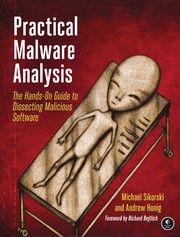
Practical Malware Analysis: The Hands-On Guide to Dissecting Malicious Software
by Michael Sikorski, Andrew Honig · 2012
~800 pages~20 hrs to read
A lab-driven introduction to static and dynamic analysis of malicious code. Not every analyst needs to reverse samples, but reading it explains what your sandbox and EDR reports are telling you.
View book →
Senior and leading
Running security as a programme: measuring risk, building playbooks and reasoning about why systems fail.

How to Measure Anything in Cybersecurity Risk
by Douglas W. Hubbard, Richard Seiersen · 2016
~370 pages~9 hrs to read
Argues for measuring security risk with calibrated estimates and simple quantitative models rather than colour-coded heat maps. Useful when you have to justify budget or report on risk to executives.
View book →
Crafting the InfoSec Playbook: Security Monitoring and Incident Response Master Plan
by Jeff Bollinger, Brandon Enright, Matthew Valites · 2015
~250 pages~6 hrs to read
Describes how to build a security monitoring and incident response program, including playbooks that tie data sources to the threats you care about. For analysts running or designing a SOC.
View book →
Security Engineering: A Guide to Building Dependable Distributed Systems
by Ross Anderson · 2001
~1000 pages~25 hrs to read
A broad, deep reference on why systems fail and how attackers and defenders think, from cryptography to human factors. Read it in pieces as your scope grows toward architecture and strategy.
View book →
Book links go to Amazon and are affiliate links. As an Amazon Associate I earn from qualifying purchases.
Frequently asked questions
Which book should a Cybersecurity Analyst read first?
CompTIA Security+ Study Guide: Exam SY0-701 by Mike Chapple, David Seidl. It gives you a structured map of the whole field and a recognised entry credential. Use it to find which areas you want to go deeper in.
Do I need to read all 12 books?
No. The list is a menu, not a syllabus. Find your stage (getting started: 4, doing the job: 5, senior and leading: 3), begin with one book (we suggest CompTIA Security+ Study Guide: Exam SY0-701), then pick the next book by the problem you are facing at work. Come back to the others when the situation they cover arrives.
How long does it take to read these books?
The 9 books with a known page count add up to about 4,230 pages, roughly 106 hours at 1.5 minutes a page. At three hours a week that is about 35 weeks; at six hours a week, about 18. The list is meant to be read over time, one book at a time, not in one run.
Are these books up to date?
They range from 2001 (Security Engineering) to 2023 (CompTIA Security+ Study Guide). Older titles are included because they teach principles that have not changed; for tools and platforms, we favour recent editions. Check the edition before you buy.
Related reading
Some links are affiliate links: we earn a small commission if you buy, at no cost to you. It does not change what we list.